
Remanufactured, Reconditioned or Rebuilt Gearbox:
What’s the Difference?
In the automotive aftermarket sector, the terms remanufactured, reconditioned and rebuilt are often used interchangeably, as if they referred to the same process. From a technical and industrial perspective, however, a remanufactured gearbox is fundamentally different from a reconditioned, rebuilt or simply used one.
For distributors, resellers and OEMs, choosing between a remanufactured, reconditioned, rebuilt or used gearbox can make the difference between operational continuity and unexpected downtime, between protected margins and hidden costs.
In this article we analyse the technical differences between these four terms and explain why industrial remanufacturing represents the only approach capable of ensuring performance equivalent to a new unit, long-term reliability and reduced operational risk.
Technical Differences Between Each Process
The distinction between remanufactured, reconditioned and rebuilt lies in the technical process applied, the level of control involved and the responsibility assumed by the supplier for the component. To better understand these differences, it is also useful to compare them with a used gearbox, which represents the absence of a structured processing method.
• Remanufacturing: systematic and preventive approach
• Reconditioning: functional approach
• Rebuilt: corrective approach
• Used: basic inspection and compatibility check
Let us analyse each process in detail.
Remanufactured Gearbox
In an industrial and OEM context, remanufacturing is a conscious technical choice that makes it possible to obtain a component with the same performance and reliability as a new gearbox, while reducing environmental impact through the recovery and reuse of materials.
A remanufactured gearbox is the result of a standardized industrial process applied methodically to the entire used transmission assembly, in compliance with the relevant technical specifications.
The Tecnotrasmissioni remanufacturing process includes:
• complete disassembly of the used gearbox;
• industrial washing and residue removal;
• dimensional inspection of every component (shafts, gears, bearing seats);
• tolerance checks according to OEM specifications;
• systematic replacement of wear-prone components;
• restoration of functional surfaces;
• reassembly according to controlled torque specifications and sequences;
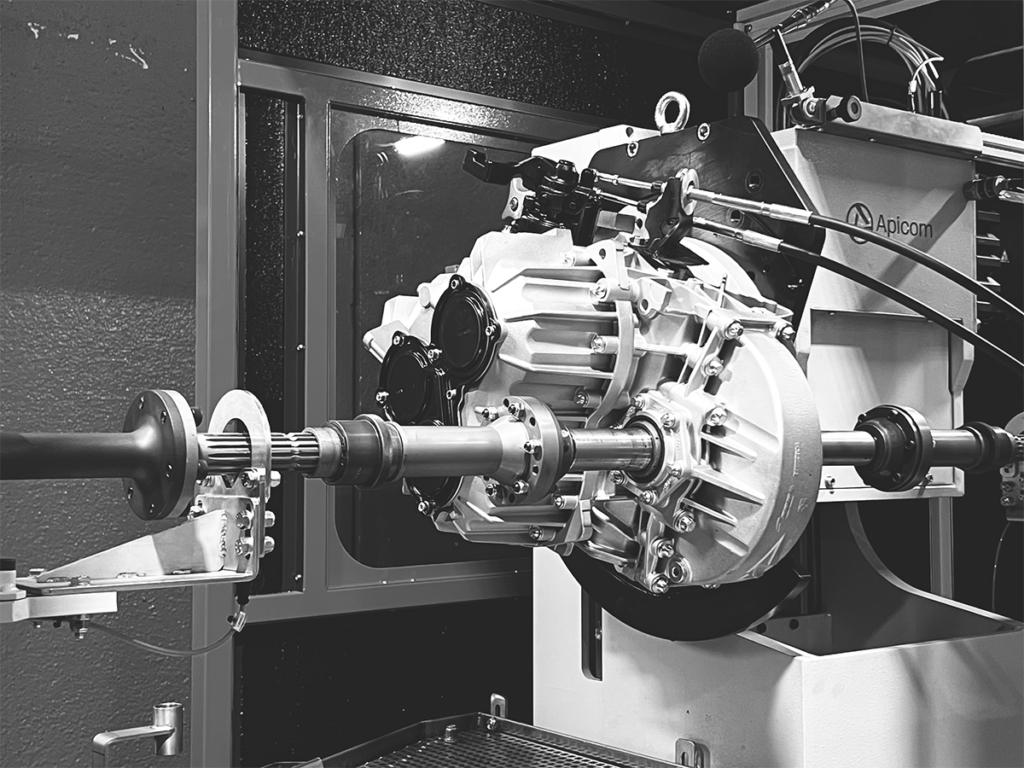
• functional testing on a test bench before delivery.
Reconditioned Gearbox
A reconditioned gearbox is a used component restored to acceptable operating conditions through functional restoration operations. Unlike remanufacturing, reconditioning does not necessarily follow a standardized process, and the level of intervention may vary depending on the initial condition of the component.
The objective of reconditioning is to restore functionality; it generally does not include complete dimensional measurements, preventive component replacement or structured testing procedures.
The reconditioning process generally includes:
• thorough cleaning;
• basic functional inspection;
• possible replacement of damaged components;
• surface or cosmetic restoration.
The absence of a standardized industrial process means that the quality and reliability of the final result can vary. For this reason, reconditioning may be suitable in contexts where operational risk is limited, but it is less reliable for structured B2B supply chains that require continuity and certifiable performance.
Rebuilt Gearbox
A rebuilt gearbox is a used component that has been inspected and restored only for the elements showing evident anomalies or functional issues. The intervention is aimed at resolving a specific problem, following a corrective rather than a preventive approach.
The rebuilding process follows a selective logic: the intervention focuses on the specific fault, but there is no preventive assessment of the entire unit nor a complete restoration of the original conditions.
The rebuilding process generally includes:
• preliminary inspection;
• partial or complete disassembly depending on the damage;
• replacement of compromised components;
• targeted functional restoration;
• functional verification.
The rebuilding process resolves the immediate issue but does not guarantee the overall long-term reliability of the transmission assembly. Since preventive replacement of wear-prone components is not included, the risk of further malfunctions remains. For this reason, rebuilding is an effective solution to resolve a known fault, but it does not offer the same guarantees of operational continuity as a remanufactured gearbox.
Used Gearbox
A used gearbox is a component previously in service that is marketed without undergoing a structured process of remanufacturing, reconditioning or rebuilding. The unit is removed from a vehicle and made available for resale in its current condition, except for basic checks.
For a used transmission, no industrialized process is applied. The checks generally include:
• compatibility and adaptability check for the intended application;
• visual inspection to ensure the absence of evident external damage;
• manual verification of operation with the transmission assembled.
The following operations are not included:
• complete disassembly;
• dimensional inspections and tolerance verification;
• preventive replacement of wear-prone components;
• systematic restoration of functional surfaces;
• structured testing on a test bench.
The component may appear to function correctly at the time of installation, but there is no process that certifies its performance or long-term operational reliability. Operational risk is entirely borne by the buyer, without structured guarantees regarding durability or reliability.
Technical Parameters Compared
The differences between remanufactured, reconditioned, rebuilt and used gearboxes are summarized in the comparative table below, which highlights the main technical and operational parameters of each process.
Remanufactured, Reconditioned, Rebuilt and Used Gearbox: Differences
| Remanufactured | Reconditioned | Rebuilt | Used | |
| Complete disassembly | ✅ Always performed | ⚠️ Not always performed | ⚠️ Only if necessary | ❌ Not performed |
| Dimensional inspections and tolerance verification | ✅ Systematic | ⚠️ Generally incomplete | ⚠️ Limited to the fault | ❌ Not performed |
| Preventive replacement of wear-prone components | ✅ Systematic | ⚠️ Occasional | ⚠️ Only damaged parts | ❌ Not included |
| Restoration of functional surfaces | ✅ Included | ⚠️ Partial | ⚠️ Only if related to the fault | ❌ Not included |
| Test bench testing | ✅ Included | ⚠️ Not always performed | ⚠️ Basic functional check | ❌ Not performed |
| Process standardization | ✅ Structured process | ⚠️ Variable | ⚠️ Problem-focused | ❌ Absent |
| Level of control | 🟢 High | 🟡 Medium | 🟠 Selective | 🔴 Limited |
| Objective of the intervention | Remanufactured Full restoration of performance | Reconditioned Functional restoration | Rebuilt Fault resolution | Used Direct reuse |
Why Remanufacturing Reduces Operational Risk
For companies managing B2B supply in the automotive sector, choosing between a remanufactured, reconditioned, rebuilt or used transmission has measurable consequences both in terms of operational risk and economic impact.
A used gearbox may appear convenient, but a latent defect can cause unexpected downtime, with management costs that can largely exceed the initial savings. In the case of a rebuilt gearbox, the visible fault is resolved, but there is no certainty that other components will not fail in the future.
A remanufactured gearbox, on the other hand, thanks to the complete inspection process and the preventive replacement of wear-prone components, enables a significant reduction of operational risk.
Moreover, costs do not stop at the purchase price. Returns, rework and non-conformity management can represent a significant cost factor. For companies managing structured supply volumes, the difference between a standardized process and a variable one directly affects whether margins are protected or eroded.
Certified Remanufacturing: The Tecnotrasmissioni Approach
At Tecnotrasmissioni we remanufacture manual and semi-automatic gearboxes by applying the most comprehensive level of intervention in terms of process, inspection and performance restoration. Our standardized industrial process is certified according to ISO 9001 and IATF 16949, complies with OEM technical specifications and ensures performance equivalent to a new unit.
Over more than 35 years of activity, we have developed know-how covering over 2,000 models from 30 different brands. We design proprietary testing equipment in-house, maintaining full control over process quality. All remanufactured gearboxes are covered by a standard 12-month warranty.
For distributors, resellers and OEMs managing structured supply chains, choosing a Tecnotrasmissioni remanufactured gearbox means relying on a technical partner capable of ensuring operational continuity, risk reduction and certified reliability.
Discover the complete range of Tecnotrasmissioni remanufactured gearboxes.